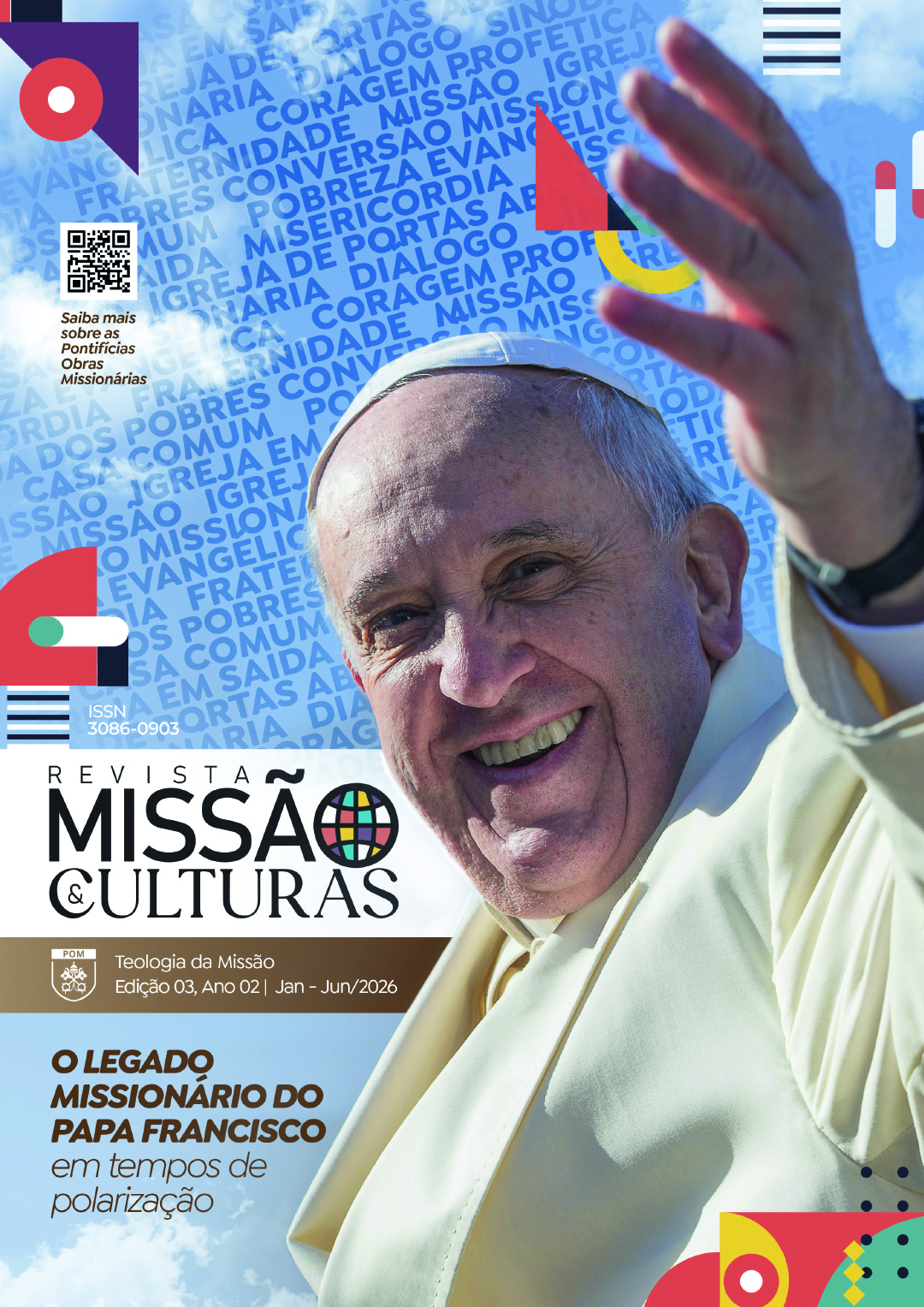
Hiperconectados, pero excluidos:
esperanza y misión en el legado del Papa Francisco, una lectura teológica de la ruptura de la comunión humana en la cultura digital
DOI:
https://doi.org/10.64954/rc-pom.i3.52Palabras clave:
Missão; Exclusão digital; Comunhão; Esperança; Cultura digital.Resumen
Este artículo analiza la paradoja contemporánea de una sociedad hiperconectada y, al mismo tiempo, profundamente excluyente, en la cual la exclusión digital supera el ámbito tecnológico y profundiza rupturas sociales, culturales y comunitarias. A la luz de Juan 17,20–23, especialmente de la oración de Jesús por la unidad, la reflexión comprende la comunión como criterio teológico y misionero, hoy confrontado por dinámicas de polarización política, social y eclesial intensificadas por las culturas digitales y las lógicas algorítmicas. En diálogo crítico con el magisterio del Papa Francisco —en particular Evangelii Gaudium, Laudato Si’, Fratelli Tutti, Querida Amazonía y Laudate Deum— el estudio interpreta la exclusión digital como una nueva periferia misionera, expresión actual de la cultura del descarte y de la falsa comunicación. Metodológicamente, articula exégesis bíblica, análisis sociocultural y ética tecnológica, incorporando datos empíricos sobre la exclusión digital global. Se sostiene que la respuesta cristiana no reside en el optimismo tecnocrático, sino en la esperanza cristiana, entendida como fuerza histórica, escatológica y transformadora. Se concluye que el legado misionero de Francisco propone una Iglesia en salida, sinodal y profética, capaz de reconstruir la comunión humana mediante el diálogo, la inclusión digital crítica y el cuidado de los pobres.
Descargas